The use of terminology such as ‘lockdown’ to refer to current government-controlled social distancing measures make us feel trapped in our homes; places we are supposed to love and where we should feel safe. Considering these periods of social distancing or self-isolation as spiritual retreats instead of a form of solitary confinement may be one way to help us cope with staying put. And the practice of slowing down by staying put and taking occasional breaks from the outside world and our busy lives may be worth holding on to once the crisis is over, as they reveal inner truths and new possibilities.
Over the past few weeks, stay-at-home orders have been issued in several countries in a bid to stop the spread of the coronavirus, causing widespread panic or paralysis due to the sudden inability to move about freely. The term "lockdown", often used to describe confinement to prison cells in addition to the limitation of movement in emergencies, has widely been used, becoming a new word added to the vocabulary of the ordinary person.
But its widespread use has led us to feel trapped. Our sudden lack of freedom of movement and freedom of gathering have made us resent self-isolation and social distancing. Our lives as we have known them have been taken away from us. Yet stripping life to the bare essentials is not bad. So how can we prevent ourselves from thinking that our houses are prisons and self-isolation - some form of a slow psychological torture?
When the restrictions are lifted, it is likely that we will return to our former lives, forgetting the value of our houses and of the slowing down of our lives that has led, in many, to the generation of new insights and wisdom about the past, the present and the future. By rethinking time spent at home without others as a sacred time, we can perhaps start making this a new habit when the crisis has eventually passed.
The value of retreats
Spiritual retreats are practiced in many religions across the world, particularly in Buddhism. Such retreats focus on purposefully withdrawing from the world and spending time meditating and reflecting on the self and the relationship of the self with the world. People who have completed such retreats often cite a more intense connection between body and soul and between the self and the universe. These retreats are far from easy, but yield positive results to those willing to embark on a spiritual journey and with patience to stop and listen to what the universe is saying.
The word ‘seclusion’, or ‘the state of being private and away from other people’, comes to mind. In an era where we live our lives so intensely online and in public, disconnecting, especially without intention to do so, may seem distressing. The biggest issue related to the coronavirus lockdown is that many of us do not feel the desire to retreat or live a secluded life. It has been forced upon us. Yet people have purposefully self-secluded for centuries in a bid to gain clarity and inner strength, and doing so can help us become improved versions of ourselves. The ability to take more private time seems particularly attractive when all our actions are out in the open, judged by others and thus artificially created.
Having the right mindset
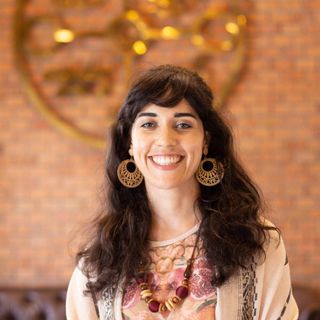
Retreating does not mean confinement or total isolation. It is important to stay connected, but it is also important to stop wanting to do so by connecting physically, and it is important to slow down from the daily hustle and bustle. Spending time with the self can reveal hidden truths and create wisdom. But we are also our worst enemies sometimes, unwilling to confront our weaknesses that is necessary to transcend them. Luciana dos Santos Duarte, who provides guided meditations and has embarked on a number of spiritual retreats in Thailand over the last years, says that “you must want to develop your inner self, be open to doubt your choices and your way of understanding reality. Most people are arrogant, narcissistic, and they do believe that their opinion is a truth itself”.
Getting to know yourself
Dos Santos Duarte says about the retreats she attended that “the monks used to say that the only happiness that exists is to know oneself. It is inner wisdom, not an external fact, a trip, a relationship, or a financial success, that will bring happiness. It’s the ability to know yourself…”. Thus, retreating is a process of getting to know yourself and listening to who you are—a process that will reveal inner truths. And you don’t need to travel to the far reaches of the world to be able to retreat, this crisis is showing.
How to retreat at home
Some tips for how to turn our current social distancing exercise into a retreat:
Accept that life has to slow down and embrace that our lives now are qualitatively different from the busy lives we usually lead;
Try to use the slowness of life for introspection and meditation, as well as the development of bonds and relationships with people who are in your nucleus;
Accept that it is going to be tough to withdraw from the public instead of living publicly, but embrace the opportunity to be able to do so.
The basics of meditation
Just observe your thoughts. The nature of the mind is to have random thoughts about everything, and we may be more keen or attached to a certain pattern of thoughts, like to be sad, or to be anxious. Think about your mind as a movie and you as the observer. What kind of movie do you want to watch? Horror, drama, romantic comedy, suspense? Try to identify the pattern of your thoughts, and don’t get so involved with them. Again: they are thoughts, not reality.
Try to think about the present moment. The Thai monks used to say: “do you want to be sad? So think about the past. Do you want to be anxious? So think about the future. Do you want to stay in peace? So think about the present.”
If it is really hard to keep the attention in the present moment, speak to yourself about what you are observing. For example: “It is a beautiful morning, the sun is shining. I’m drinking my tea. It is warm….”. Descriptions about the present moment can help to live it. And in the present moment, we usually don’t have problems.
Record your observations
“In a retreat, you will not be drinking rainbows and eating butterflies. It’s tough,” says Dos Santos Duarte. Yet this journey is worth the sacrifices and potential suffering. Retreating doesn’t mean giving up; it means the opposite—engaging with yourself and the person you want to be, including the wider purpose you have and the role you want to and can play. It means reflecting on your deepest desires, your capabilities, and your own strengths in being able to pursue the path that you choose. The crisis is proving to be a moment of truth, revealing hidden things about the world and the self. Make a point of recording your insights and findings.
We hope that when the storm passes, we will remember the value of retreating, and will come to embrace it even as our lives resume and we leave our homes.
Authors: Lize Swartz and Luciana dos Santos Duarte
You may want to explore Peace Revolution 42 days of self-development program and an online course.
Comments
No comments yet. Be the first to share your thoughts!
Leave a comment
You need to sign-in to post a comment.
Sign In