To be human is, in many ways, to navigate competing directions. We are shaped by our responsibilities, our relationships, our convictions, and the circumstances of the world we inhabit. We cannot simply turn away from these demands, nor should we. Yet when everything calls for our attention at once, we can become so absorbed in responding to the outside world that we gradually lose touch with our own center.
In Book of Mercy, Leonard Cohen captures this tension beautifully - the experience of being pulled apart by the demands of life, and the quiet relief of returning to what makes us whole:
I lost my way. I forgot to call on your name. The raw heart beat against the world, and the tears were for my lost victory. But you are here. You have always been here. The world is all forgetting, and the heart is a rage of directions, but your name unifies the heart, and the world is lifted into its place. Blessed is the one who waits in the traveller's heart for his turning.
One line that particularly resonates with me is: "The heart is a rage of directions." It names what happens when legitimate responsibilities and worries pull us apart simultaneously. We are drawn toward deadlines, the expectations of others, financial pressures, daily compromises, and the constant stream of news from a world marked by conflict and division - until our inner lives become a tug-of-war.
Yet this fragmentation does not have to be our permanent state. It can point us to something essential: when we restore a sense of unity within ourselves, we allow the world to be "lifted into its place."
As news of armed conflicts, terror, and suffering grows harder to ignore, it is natural to wonder what peace really means - and what one person can meaningfully do to contribute to it. Perhaps the answer starts right here: peace has to be cultivated from within. Not as a selfish retreat from reality, but as the way we stop adding our own fragmentation to an already divided world.
We often treat peace as something external: a political condition negotiated somewhere or defined merely by the absence of open conflict. Yet a genuine culture of peace also begins with a more personal shift: learning to carry the weight of our own lives without projecting our exhaustion onto the people around us.
Think about how everyday tensions take root. Not every conflict begins with malice; many emerge from the accumulated pressures of daily life and our difficulty navigating them. When we are stretched thin by demands, nuance is often the first thing to disappear. We stop listening to understand and start listening to defend our position or prepare our next response. Without realising it, we begin mistaking speed for clarity, and reactivity for strength.
Meditation and mindfulness are often misunderstood as ways to step back from real-world pressures. In truth, they are a discipline for meeting them. Rather than numbing us to life, they help us gather our scattered attention and create a pause before we react - the very space in which patience, discernment, and genuine presence become possible.
We may not be sitting at diplomatic tables, but every conversation we enter offers an opportunity to either escalate tension or respond with awareness. When our inner life is no longer a tug-of-war, we become better equipped to navigate disagreements without passing our own frustrations on to others. That is how a culture of peace starts taking shape: not merely as an abstract ideal, but through the way we relate to one another, here and now.
None of us can single-handedly mend the larger fractures of our time. Yet none of us is merely a passive bystander, either.
Our inner states influence the environments we create around us. Fragmentation, impatience and outrage can spread through families, workplaces and communities - but so can steadiness, clarity and compassion. When we do the quiet work of bringing greater coherence and harmony to our inner lives, we also change, however subtly, the way we show up for others and the atmosphere we help create.
Think of a tense conversation (a sharp critique at work, a disagreement at home). The automatic reaction arrives before you have chosen it: you interrupt, sharpen your tone, defend the detail while missing the point, or go quiet and rehearse the comeback for the rest of the afternoon. Born of fatigue and scattered attention, this response usually escalates the conflict. A trained pause changes the outcome: you listen to the end, separate the legitimate point from the tone, and answer from clarity rather than from hurt. The disagreement does not disappear, but it stops escalating - and those who witness it learn that it is possible to disagree without breaking the bond. There, in that small scene, a culture of peace begins to take shape.
A culture of peace is not built solely through international treaties or institutional reforms. It also takes place in everyday interactions, through individuals who refuse to let the pressures of life turn into hostility, and who choose to meet the world with discernment rather than reactivity and polarisation.
This is not a naive ideal, nor does it diminish the importance of addressing the structural causes of conflict. It is simply an acknowledgement that the world we share is also shaped by the way we choose to inhabit it. In an uncertain age, that may be one of the most meaningful places to begin.
From 10–16 May 2027, the World Peace Initiative Foundation will host the third edition of the Disconnect to Reconnect Retreat in Lede, Belgium.
Set in a peaceful environment in the heart of Europe, this six-day gathering offers a small group of participants the opportunity to step away from the demands and distractions of daily life and restore a sense of inner balance.
Guided by experienced teaching monks and certified trainers, the programme combines structured meditation, mindful movement, reflective talks and group workshops. Together, these practices offer practical ways to cultivate greater awareness, emotional steadiness and discernment - qualities that participants can bring back into their work, relationships and everyday responsibilities.
Sometimes, allowing the world to be lifted back into its place begins with simply stepping away from the rush for a few days and giving ourselves the space to reconnect with our own center.
This is the conversation we want to open. If it resonates with you, we would be glad to have you with us.
Discover the retreat and reserve your place.
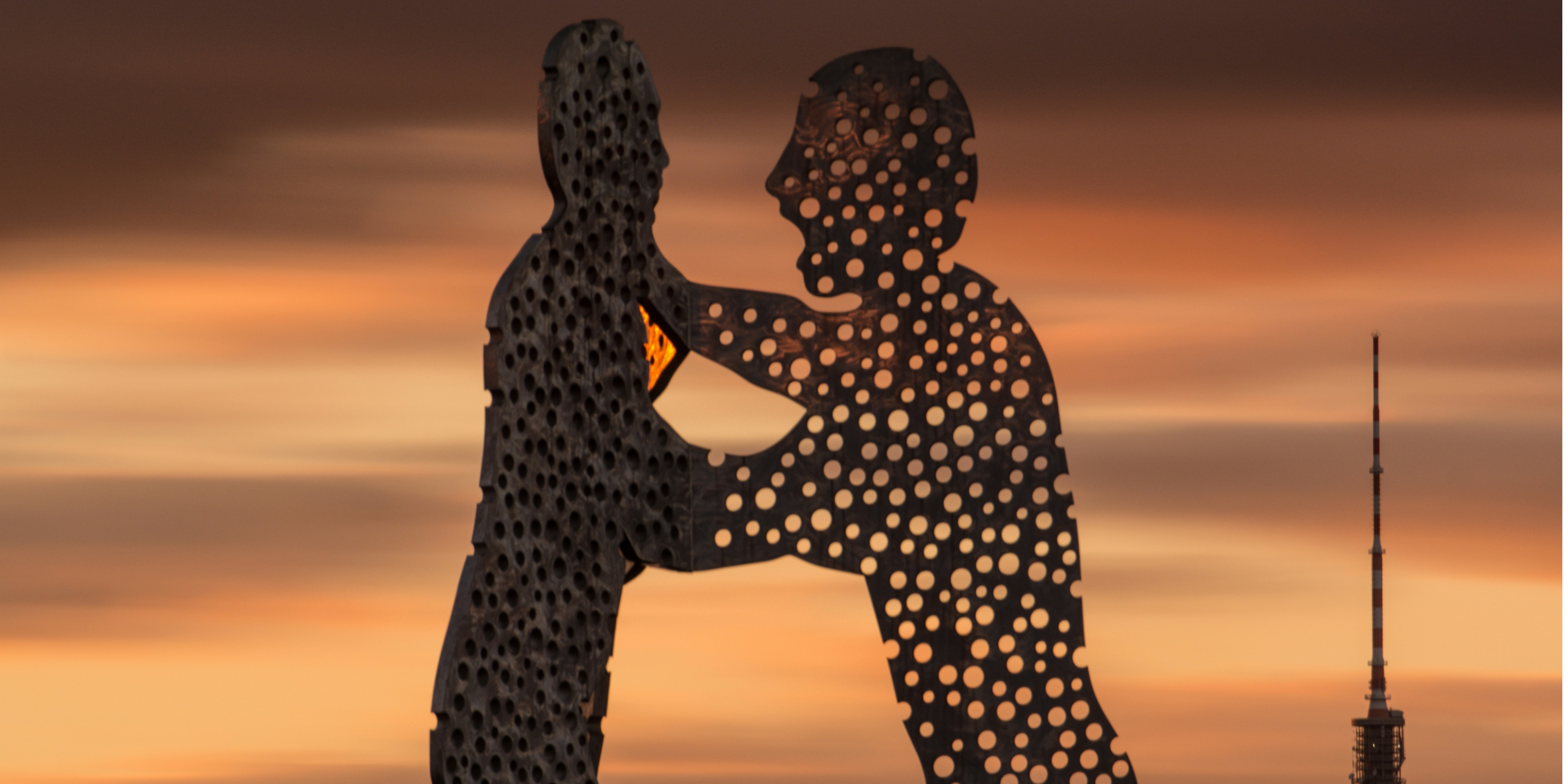
Image: Molecule Man on the River Spree, Berlin - standing where three once-divided districts meet. Photo: Daniel Lonn / Unsplash.
No comments yet. Be the first to share your thoughts!
You need to sign-in to post a comment.
Sign In